MRI Upload
Summary:
What is the best treatment for an enlarged prostate? There isn’t a one-size-fits-all answer. The right choice depends on individual symptoms, health, and goals. From lifestyle changes to advanced, minimally invasive procedures, treatment options for benign prostatic hyperplasia (BPH) vary widely in approach and outcomes.
Here’s what you’ll learn in this guide:
- Understanding BPH: How an enlarged prostate develops, common symptoms, and risk factors like age, weight, and hormones.
- Treatment Pathways: Options ranging from lifestyle adjustments and medications to surgical and minimally invasive procedures.
- Advanced Treatments: Innovative MRI-guided solutions such as FLA and TULSA-PRO.
- Choosing the Right Option: Why consultation with a physician is essential to determine the best, personalized treatment plan.
What is the best treatment for an enlarged prostate? The truth is that there is no single, universal answer to this question.
Factors, including the severity of symptoms, age, overall health, and potential side effects, among others, influence which treatment is best for an individual patient with benign prostatic hyperplasia (BPH).
By learning about treatment options and consulting with their physician and care team, patients can decide which treatment for an enlarged prostate is best in their opinion for their unique situation.
Learning more about BPH and available treatment options can help patients make more informed decisions about their care. Keep reading to learn more.
Understanding an Enlarged Prostate
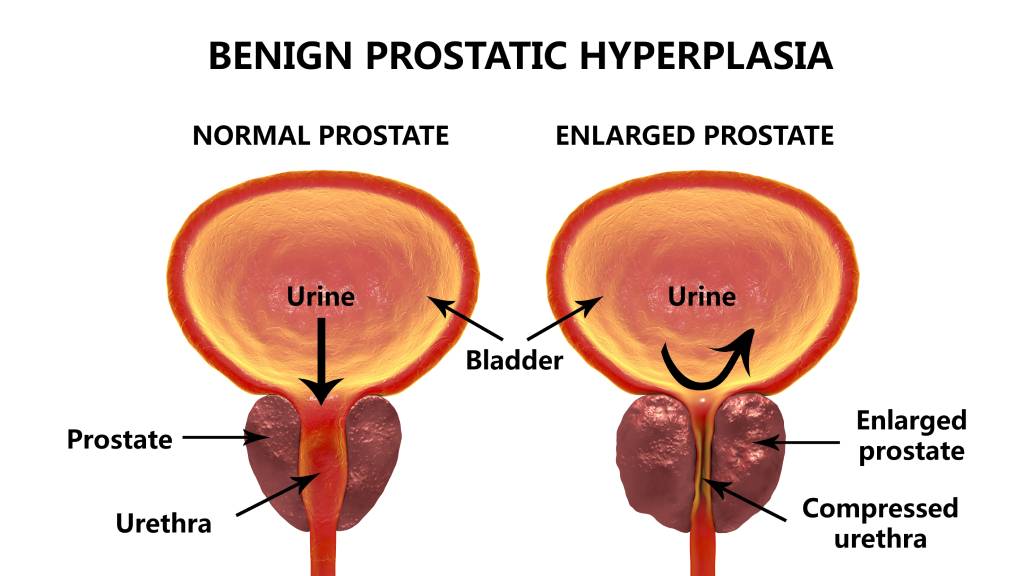
The term “enlarged prostate” generally refers to benign prostatic hyperplasia (BPH), a non-cancerous but abnormal enlargement of prostate tissue. While the prostate gland grows naturally over time, BPH refers to excessive growth that causes problems, such as interfering with the normal function of the bladder and urethra.
The prostate sits below the bladder and surrounds part of the urethra. The tissue growth that’s central to BPH can interfere with the normal function of the urethra, making it harder for it to open and for individuals to pass urine.
Symptoms of BPH include, but are not limited to:
- A weak urine stream
- Frequent need to urinate, especially at night
- Difficulty starting or stopping the flow of urine
- Straining to urinate
- A feeling that the bladder is not completely empty
BPH doesn’t normally lead to life-threatening health issues, although kidney damage, bladder stones, infections, and other serious medical problems can arise if BPH is left untreated. BPH can cause significant quality-of-life concerns, however. The symptoms can disrupt daily life and create ongoing discomfort.
BPH: Common Risk Factors and Causes
Although the precise cause of BPH isn’t known, common risk factors have been identified. These BPH risk factors include:
- Age. As StatPearls points out, the historical prevalence of BPH in men is as high as 50-60 percent for men in their 60s and 80-90 percent for men older than 70.
- Weight. Obesity is linked to a higher risk of BPH, as the Mayo Clinic points out.
- Genetic predisposition and family history. Having a blood relative who has or had BPH increases the risk that an individual may experience BPH themselves.
- Certain other illnesses. Both diabetes and heart disease are linked to an increased risk of BPH. StatPearls points out that there is a potential connection between the use of antidiabetic medications, like insulin, and the incidence of BPH as well.
- Hormonal changes. Shifts in testosterone and dihydrotestosterone (DHT) levels can contribute to prostate growth.

Exploring Treatment Options for an Enlarged Prostate
There is no single best treatment for an enlarged prostate in all cases. However, patients can and should consult with their physician and care team to decide which treatment is best for them on a personal level. Potential treatments for prostate enlargement include:
Lifestyle Modifications and Observation
When BPH is present but does not cause significant issues for a patient, making lifestyle modifications and monitoring the condition can be an appropriate approach. Patients may be encouraged to limit evening fluid intake, reduce their use of alcohol and caffeine, and make positive lifestyle modifications like increasing exercise and reducing weight.
This option does not preclude later treatment. Instead, it recognizes that symptoms are mild and might be managed without more significant intervention.
Medications
Certain medications can be used to relax the muscle in the prostate as well as decrease the production of DHT, which can slow the growth of the prostate, as the Cleveland Clinic explains.
Alpha blockers, such as tamsulosin and silodosin, relax the prostate muscle. Finasteride and dutasteride are examples of 5-alpha-reductase inhibitors, which lower DHT Levels. These medicines can lead to side effects, like sexual dysfunction and fatigue, but are effective enlarged prostate treatments for some patients.
Surgical Treatments
Surgery for BPH physically reduces the size of the prostate by removing tissue from it. Potential side effects include urinary incontinence and erectile dysfunction. Traditional surgical treatments for enlarged prostates include, but are not limited to:
- Simple prostatectomy. This procedure involves the removal of part of the prostate while leaving part of it in place.
- Transurethral resection of the prostate (TURP). In this procedure, a physician inserts a device called a loop through the urethra to identify and physically remove excess prostate tissue.
- Transurethral laser surgery. A GreenLight laser prostatectomy uses a similar urethral approach as seen with a TURP, but removes prostate tissue with a laser. A HoLEP procedure also uses a laser and approaches the prostate through the urethra but is even more aggressive.
Minimally Invasive Treatments for an Enlarged Prostate
Minimally invasive treatments for BPH offer a lower risk of side effects compared to certain other treatments. While not risk-free, they can offer potential benefits compared to traditional methods of addressing BPH. Minimally invasive BPH treatments include:
- Focal Laser Ablation (FLA). FLA is a treatment that uses precisely targeted laser energy to destroy enlarged prostate tissue without causing significant damage to the surrounding healthy tissue. MRI guidance helps the physician avoid the neuromuscular bundles responsible for erectile function and the ejaculatory ducts.
- Transurethral Ultrasound Ablation (TULSA-PRO). TULSA-PRO is an incision-free treatment that uses targeted thermal ultrasound with MRI guidance to target enlarged prostate tissue. Live MRI guidance helps to avoid significant damage to surrounding healthy tissue to support continued urinary and sexual function. Compared to FLA, TULSA-PRO is commonly used to treat larger areas of the prostate.
Each type of BPH treatment offers its own advantages and potential drawbacks. Learning about options as a patient is important for making an informed decision. However, it is crucial to discuss treatment options with a physician to decide on the best treatment for an enlarged prostate on an individual level.
Frequently Asked Questions About Enlarged Prostate Treatment
What is the main cause of prostate enlargement?
While several factors can contribute to benign prostatic hyperplasia (BPH), aging and the hormonal changes that come with it are the primary causes of BPH. Changes in levels of testosterone and dihydrotestosterone (DHT), which happen naturally as men age, can lead to excessive prostate growth.
What do urologists recommend for an enlarged prostate?
The recommendations of urologists and other physicians who treat enlarged prostates vary based on the specifics of the cases presented by each patient. There is no single best treatment for an enlarged prostate. The issues experienced by individual patients, their overall level of health, the effectiveness of specific treatment options, their side effect profiles, and many other factors are considered by physicians in each case.
However, in general, urologists and other physicians might start by suggesting lifestyle modifications and medications before recommending surgery or minimally invasive treatments for an enlarged prostate.
Does ejaculating help an enlarged prostate?
Regular ejaculation can help to relieve the buildup of prostate fluid within the gland. However, ejaculation is not a treatment for an enlarged prostate or BPH.
What is the life expectancy for someone with an enlarged prostate?
BPH does not generally affect life expectancy – someone with BPH likely will not have a shortened life expectancy due to the condition by itself, except for the most serious cases if left untreated. While BPH can lead to many quality-of-life issues and more serious concerns like infections and bladder stones, it is normally not life-threatening.
What is the fastest way to shrink an enlarged prostate?
There is no instant process to shrink and resolve an enlarged prostate. Medications can reduce prostate size over time, while minimally invasive treatments like TULSA-PRO and LFT can offer faster symptom relief once completed. A personalized treatment plan made in consultation with a patient’s physician and care team is the best path to addressing BPH.
Can BPH cause hematuria?
Yes, BPH can potentially lead to hematuria (blood in the urine). The prostate pressing against the urethra can cause bleeding from both areas. However, BPH is not the only cause of hematuria and more serious possible causes would need to be evaluated by a physician.
Minimally Invasive, MRI-Guided Treatments for BPH
Prostate Laser Center offers qualifying patients minimally invasive treatment options for an enlarged prostate. Both FLA and TULSA-PRO are MRI-guided procedures, giving physicians greater control over the areas they target and helping them avoid significant damage to healthy surrounding tissue, offering a reduced incidence of side effects as compared to certain other options for treating prostate cancer.
Learn more about whether FLA or TULSA-PRO is an appropriate option for treating BPH and addressing the many quality-of-life symptoms it can cause. Request a consultation today.
NOTE: The information provided on this website is general medical information and does not establish a physician-patient relationship. Please discuss your particular situation with a qualified medical professional.