MRI Upload

TL;DR:
This guide breaks down prostate exam vs colonoscopy, explaining why these two screenings are not interchangeable despite some surface-level similarities. Readers will learn how each exam works, what it screens for, and when each is recommended as part of routine preventive care.
- A prostate exam screens specifically for prostate-related conditions like prostate cancer, prostatitis, and benign prostatic hyperplasia using a digital rectal exam (DRE) and/or a PSA blood test. More modern prostate exams include a multiparametric prostate MRI.
- A colonoscopy examines the colon and rectum with a camera-equipped scope to detect colon cancer, polyps, diverticulitis, Crohn’s disease, and other gastrointestinal issues.
- The procedures differ in preparation, setting, and duration—prostate exams require minimal preparation, while colonoscopies require sedation and bowel prep.
- Neither exam can replace the other, as each targets different organs and health risks.
- Understanding prostate exam vs colonoscopy helps men get the right screenings at the right time for better long-term health.
Are a prostate exam and a colonoscopy the same? Can one replace the other? Those are natural questions to ask, considering the similarities between these two procedures.
The short answer is “no.” Prostate exams and colonoscopies are distinct exams that have different purposes and focus areas and involve different procedures. While both center on screening for conditions that tend to become more common for men as they age, they are not identical or closely related.
Understanding the differences between prostate exams and colonoscopies supports getting the right screenings at the right time, which in turn can support overall health. Keep reading to learn more about prostate exams vs colonoscopies.
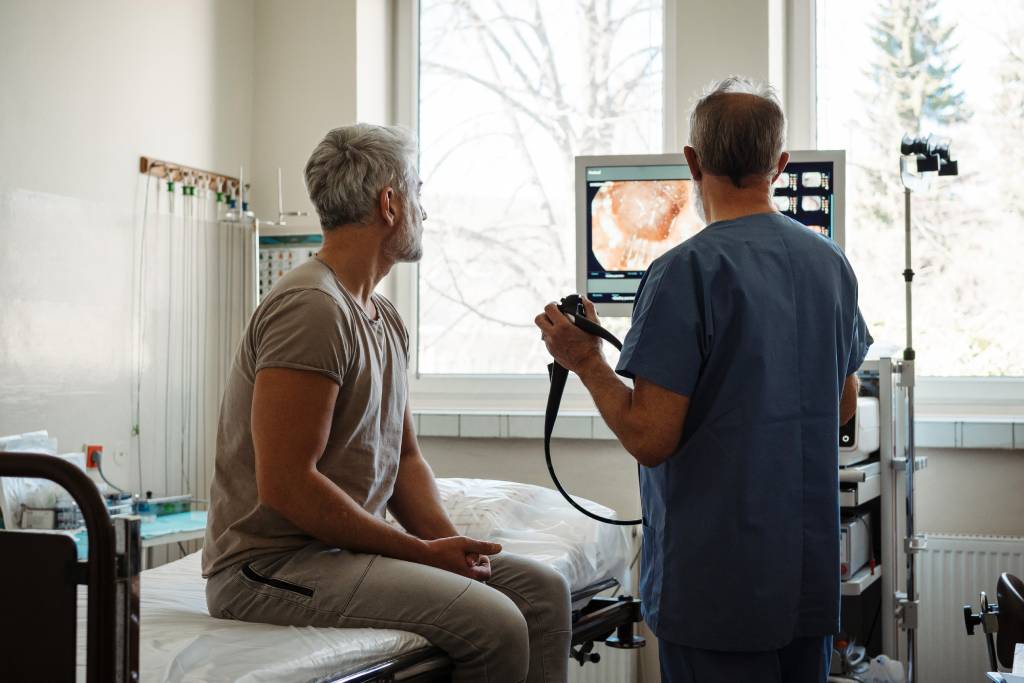
Prostate Exam vs. Colonoscopy: The Main Differences Explained
Understanding Prostate Exams
Prostate exams are the first line of screening for prostate cancer. The prostate itself is a small gland that sits below the bladder, around the urethra, and in front of the rectum. It contributes fluid to semen and helps to move semen through the urethra.
Prostate exams are used to screen for prostate cancer, prostatitis (inflammation of the prostate), and benign prostatic hyperplasia (enlarged prostate). These exams have two major components, and one, the other, or both may be used depending on the circumstances:
- A digital rectal exam (DRE). A DRE centers on a physical examination of the prostate, with a physician using a gloved, lubricated finger to assess the gland for potential concerns.
- A prostate-specific antigen (PSA) test. PSA tests identify the level of a specific protein produced by the prostate in the bloodstream. High levels of PSA in the blood can be a sign of prostate cancer and other prostate issues.
Prostate exams are used specifically in the context of identifying medical conditions related to the prostate itself and are not part of screening for issues related to the colon or rectum. This is a key difference when discussing colonoscopies vs prostate exams, as the Mayo Clinic reminds us.
However, components of a prostate exam are also used to identify potential issues in the rectum and anus. Specifically, a digital rectal exam can be used to identify signs of hemorrhoids and inflammatory bowel disease. A PSA test can help to identify issues such as prostatitis and benign prostatic hyperplasia (BPH).
A prostate exam by itself cannot conclusively determine the presence or absence of prostate cancer. However, prostate exams can lead to suspicious or abnormal findings by a physician, which would signal the need for further diagnostic procedures. A biopsy of the prostate can conclusively determine the presence or absence of prostate cancer.
Prostate exams are simple procedures that take only a few minutes and are normally conducted in a physician’s exam room or similar setting.
Understanding Colonoscopies
A colonoscopy is a diagnostic procedure used to examine the interior of the colon and rectum. The colon and rectum are part of the large intestine. The colon helps to absorb remaining nutrients and water from mostly digested food and move the waste (feces) into the rectum. The rectum stores waste until it is passed through the anus and out of the body.
The name of the procedure comes from the device used by a physician to conduct the examination – a colonoscope. As the National Institute of Diabetes and Digestive and Kidney Diseases explains, this flexible tube includes a camera on one end, allowing the physician to view the interior of these parts of the body and examine them for potential issues.
Colonoscopies fall under the category of endoscopies, a type of minimally invasive procedure where a physician uses a long, flexible tube containing a camera to examine parts of the interior of the body.
Colonoscopies are used to identify and help diagnose a wide variety of issues in the colon and rectum, with a focus on colon cancer and rectal cancer, as Mass General Brigham explains. Other conditions that can be identified during a colonoscopy include ulcers, diverticulitis, Crohn’s disease, and polyps (abnormal growths in the mucus membrane of the colon and rectum, which are often benign but can develop into cancer when untreated).
Colonoscopies are a relatively short procedure, taking about 30-60 minutes to complete. However, patients are sedated before the colonoscopy, and it is normally conducted in a hospital or specialized outpatient facility.
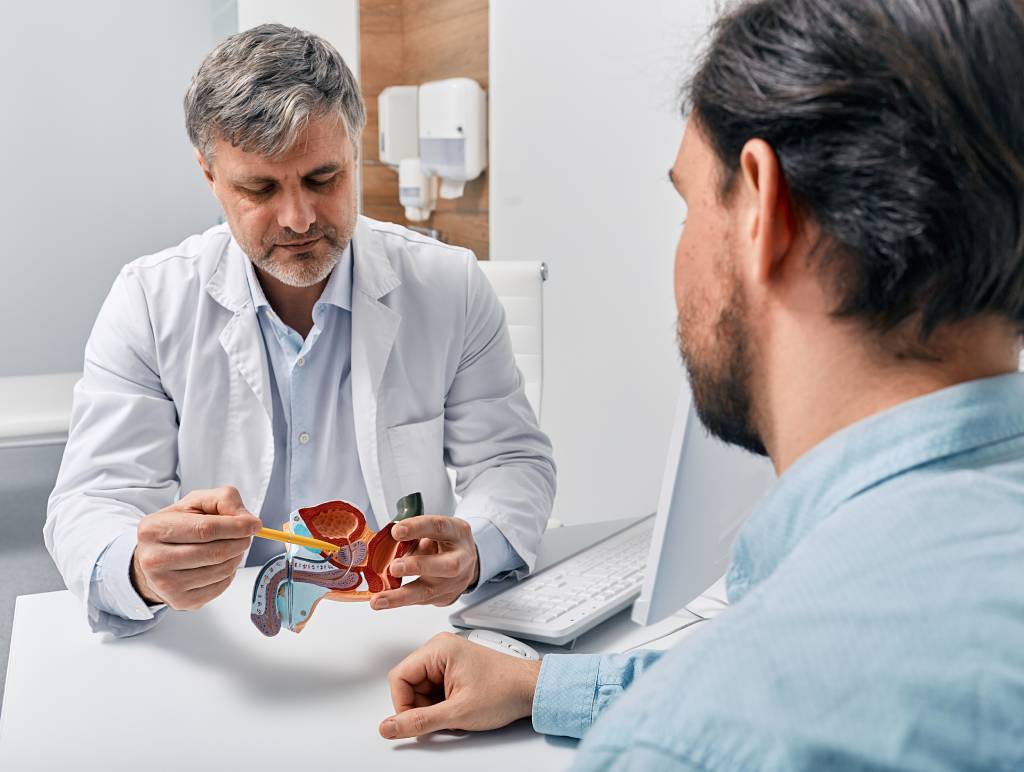
Exam for Prostate vs Colonoscopy: 5 Key Differences
| Aspect | Colonoscopy | Prostate Exam |
| Area of Focus | Colon and rectum | Prostate gland |
| Purpose | Check for colon and rectal cancer, polyps, ulcers, diverticulitis, and other issues | Check for prostate cancer, prostatitis, and benign prostatic hyperplasia |
| Type of test | Visual exam using an inserted scope containing a camera | Physical exam (DRE) and blood test (PSA test) |
| Preparation | Sedation at a hospital or outpatient facility, special diet in the days prior to the exam | Minimal, if any |
| Frequency | Typically, every 10 years, assuming no other indications of potential issues | Typically, every year |
Colonoscopy and Prostate Exam: Similarities
Colonoscopies and prostate exams are similar in that they are both preventative health screenings, are performed by a physician, and use the rectum as an access point to examine certain interior structures of the body. However, they have many more differences than similarities.
Frequently Asked Questions About Prostate Exams and Colonoscopies
What is the difference between a colonoscopy and a prostate exam?
Colonoscopies and prostate exams are both screening procedures, but they target different organs and use different diagnostic tools to examine those organs.
A colonoscopy examines the colon and rectum for polyps, signs of colon and rectal cancer, and other possible issues in these parts of the body using a small camera attached to a thin, flexible tube. A prostate exam examines the prostate gland, with a digital rectal exam (DRE) and PSA test (a blood test) being the two major components. Prostate exams help to identify issues such as prostate cancer, prostatitis, and benign prostatic hyperplasia.
Additionally, prostate exams can be conducted in a matter of minutes at a physician’s office or similar setting with no major preparations. Colonoscopies, on the other hand, require a special diet in the days leading up to the procedure as well as sedation for the patient.
What’s the difference between the colon and the prostate?
The colon, also called the large intestine, plays a key role in digestion and the excretion of waste. It absorbs water and nutrients from mostly digested food and holds waste before it’s excreted. The prostate is a gland located below the bladder and in front of the rectum. It contributes fluid to semen and helps to move semen through the urethra.
While these organs are located in the same general area of the body, they do not interact with each other and have distinct functions.
Can a colonoscopy check for prostate issues?
No, colonoscopies do not detect prostate issues, such as prostate cancer or benign prostatic hyperplasia. A prostate exam is needed to screen for concerns related to the prostate.
Colonoscopies examine the colon and rectum to identify potential medical issues, such as cancer, diverticulitis, and polyps. They are used as part of routine health screening, and when patients have certain symptoms, such as abdominal pain or unexplained weight loss.
At what age should men get a colonoscopy?
The American Cancer Society recommends that people with an average risk level for colon and rectal cancer receive a colonoscopy every 10 years starting at age 45 at least through age 75. Colonoscopies are an important part of colon and rectal cancer screening, along with stool-based tests, sigmoidoscopies, and CT colonography.
Does a colonoscopy count as a prostate exam?
No, a colonoscopy and a prostate exam are separate and distinct procedures that screen for different medical issues. A colonoscopy examines the colon and rectum, helping physicians identify signs of cancer, intestinal inflammation, and other issues related to this part of the body.
A colonoscopy does not examine the prostate. A prostate exam must be scheduled with a physician for prostate cancer screening and to help identify other prostate issues, such as benign prostatic hyperplasia and prostatitis.
Minimally Invasive Treatment Options for Prostate Cancer and BPH
Prostate Laser Center provides MRI-guided, minimally invasive treatment options for both prostate cancer and benign prostatic hyperplasia (BPH) to qualifying patients. If a prostate exam and follow-up testing identify either of these issues, you may be eligible for treatment.
Learn more about prostate cancer and BPH.
NOTE: The information provided on this website is general medical information and does not establish a physician-patient relationship. Please discuss your particular situation with a qualified medical professional.